A specialized solution for flow measurement of media that require a constant temperature: bitumen, sulfur, paraffins, fuel oils, resins and other high-viscosity products. The isothermal jacket prevents solidification, crystallization and uneven changes in the viscosity of the measured medium.
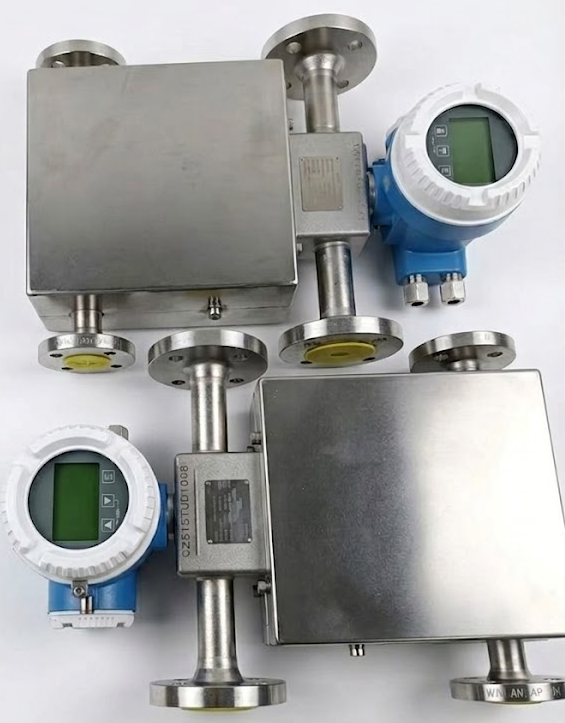
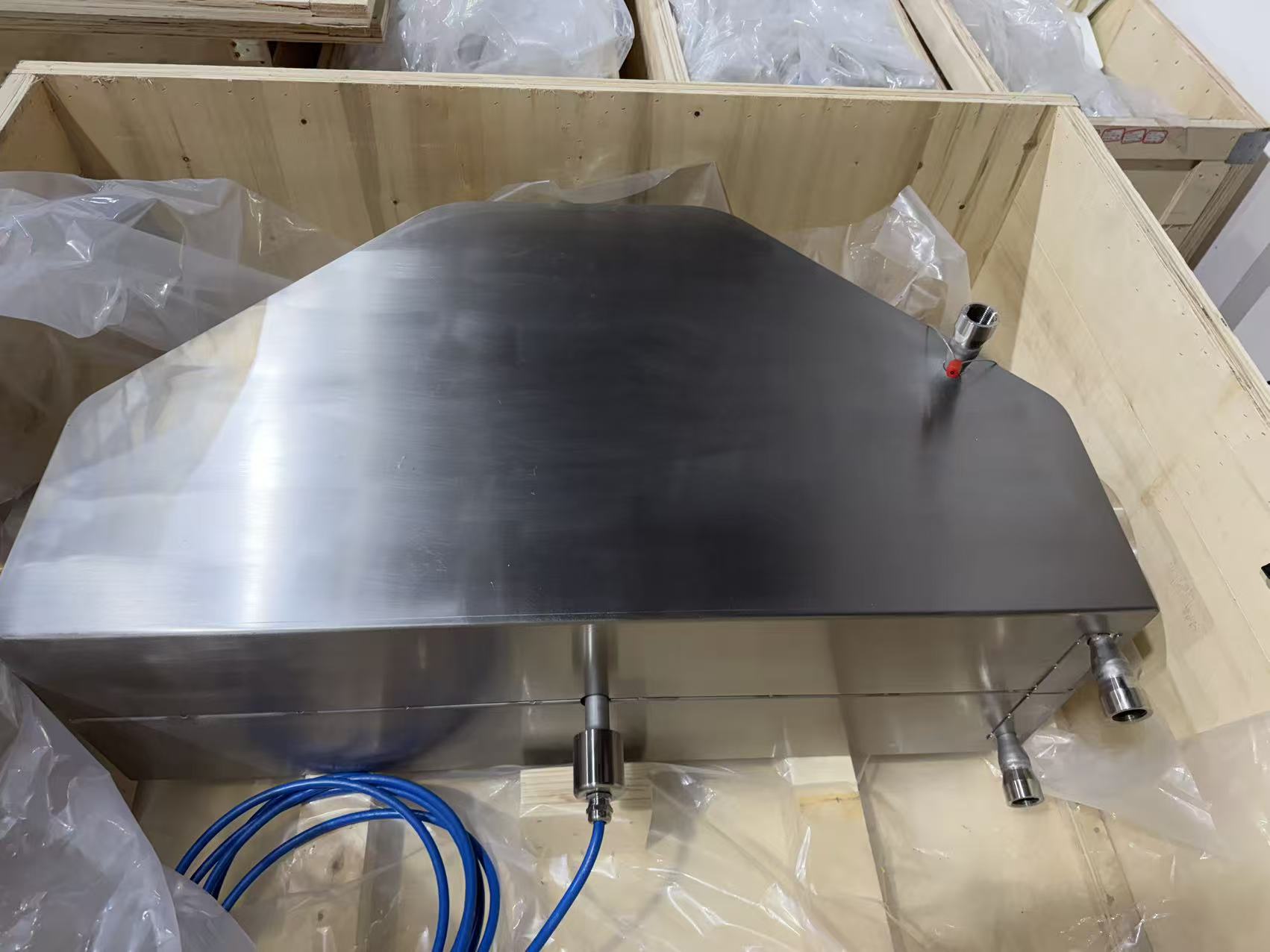
An isothermal jacket is a heat-insulating shell mounted on the sensor of a Coriolis flow meter, which maintains a stable temperature of the process medium during measurement. This is especially important for products whose viscosity critically depends on temperature.
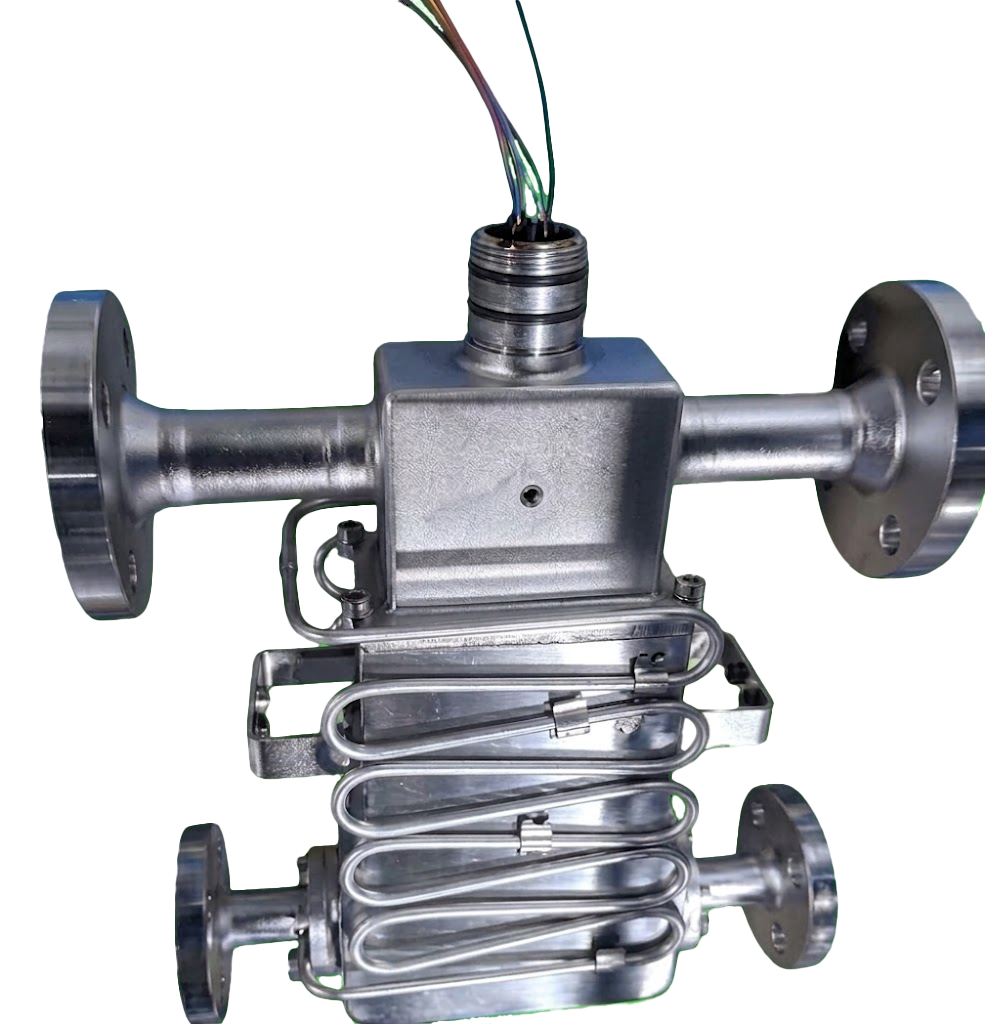
Many industrial products change their properties dramatically with the slightest temperature fluctuations. Without an isothermal jacket, flow measurement of such media becomes unstable and unreliable.
Problem: Bitumen viscosity depends exponentially on temperature. A 10 °C temperature drop can increase viscosity 10-fold or more.
Without the jacket: Temperature spikes change viscosity → the flow velocity profile changes → the mass flow measurement error can reach double-digit percentages.
With the jacket: Bitumen maintains the set temperature and viscosity throughout the measurement. The error stays within the flow meter's rated accuracy.
Problem: Sulfur is a unique product with sharply non-linear viscosity: viscosity is minimal at ~120–130 °C, rises sharply as temperature increases and reaches a maximum at ~187–190 °C, then falls.
Without the jacket: Any temperature fluctuation in the pipeline causes a dramatic change in viscosity. The flow meter "sees" chaotic changes in density and flow profile — readings become unstable.
With the jacket: Sulfur temperature is stabilized in the 135–145 °C working range — below the zone of sharp viscosity growth (maximum at ~187–190 °C). Measurements are accurate and reproducible.
Problem: When the temperature drops below the cloud point, paraffins crystallize, forming a solid phase. This clogs the measuring tubes, causes zero drift and a sharp increase in measurement error.
Without the jacket: Even brief cooling of the tube walls can cause paraffin deposits on the inner surfaces. With each cooling cycle, the layer grows.
With the jacket: The tube wall temperature is always above the crystallization point. No deposits form. The flow meter operates stably for years without cleaning.
Problem: Heavy petroleum products require heating for pumping. When they lose temperature, they lose mobility, which can lead to solidification in the measuring chamber.
Without the jacket: When flow stops (night shifts, scheduled shutdowns), the fuel oil in the sensor cools faster than in the pipeline — the sensor "solidifies" first. Restart requires prolonged warm-up.
With the jacket: The sensor temperature is maintained at the pipeline level. No local "cold spots". Restart after shutdown is immediate.
| Parameter | Value |
|---|---|
| Working medium temperature | from −196 to +350 °C |
| Heat transfer medium / coolant type | Steam, hot oil, hot water; coolants: chilled water + ethylene glycol (down to −20 °C), aqueous propylene glycol solution, silicone oil (temperature-control), fluorinated organic heat transfer fluids (Galden®, Novec™), liquid nitrogen (for deep cooling) |
| Heat transfer medium pressure | specified at ordering (depends on the version and heat transfer medium parameters) |
| Jacket material | 304 / 316L stainless steel |
| Thermal insulation | Mineral wool / aerogel (optional) |
| DN compatibility | DN08 – DN250 (depending on size) |
| Option code | 19S — Y (Yes) |
| Suitable sensor types | U, K, W, L (straight-tube), D (Δ-type) |
| Main applications | Bitumen, sulfur, paraffins, fuel oils, tars, resins, polymers |
The isothermal jacket can be used not only for heating (steam, hot oil) but also for cooling — when a reduced temperature of the measured medium must be maintained to prevent its decomposition, polymerization or undesirable chemical reactions.
Real-world example: Flow measurement of liquid dimethyl sulfide (DMS) in a petrochemical plant. DMS has a boiling point of only +37 °C and is prone to thermal decomposition. The pipeline and the Mass-EXPERT flow meter sensor were fitted with an isothermal jacket with forced coolant circulation (chilled water + ethylene glycol, −5 °C). The jacket ensured a stable medium temperature of +2…+5 °C throughout the measurement, eliminating vapor formation in the sensor and ensuring a measurement accuracy of ±0.1%.
Result: stable temperature → constant density → accurate mass flow readings and complete absence of a gas phase in the sensor.
We will contact you shortly.

